
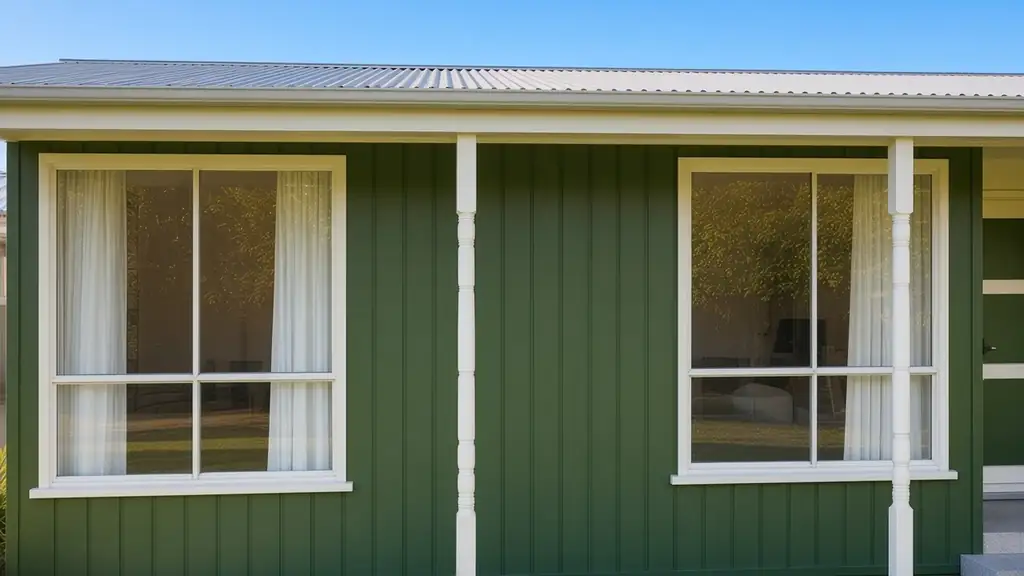
Drive from Petone up to Upper Hutt and you pass through a lot of different houses. State houses and post-war family homes on the flat. Brick-and-tile on the western hills. Old cottages near the harbour. Bush-shaded homes in the side valleys. They all need washing eventually, but they don't all get dirty the same way, and that changes how often you need to do it.
The valley floor: grime and dust
On the flat through Waterloo, Epuni, Naenae and Taitā, most houses get decent sun, at least on the north and west sides. What they collect is grime. Traffic on the main roads, dust blowing off dry ground in summer and the general film that builds up on any house near a busy corridor all stick to the walls, especially on rough or chalky paint.
The south walls still go green, and the eaves still collect black mould and cobwebs, but the overall look is more grey and dull than green.
For these homes, a yearly wash is usually plenty.
The western hills: shade
Belmont, Maungaraki, Normandale and Korokoro sit on the slopes on the western side of the valley. Many of the houses face east, towards the view, and the hill behind them blocks the afternoon sun. In winter, the back and south walls can go weeks without direct light.
That's where green algae and black mould take over. It's not unusual for a hillside home to need washing more often than one on the flat a kilometre away.
The side valleys: shade and bush
Stokes Valley and Wainuiomata take it further. Both are enclosed by bush-covered hills, so the sun arrives late and leaves early, and the air stays damp. Walls on almost every side can go green, steps and paths get mossy, and decks turn slippery.
For homes like these, a soft wash makes the biggest difference because it kills the growth rather than just moving it around. Hosing or scrubbing knocks the top layer off and the rest grows straight back.
Upper Hutt: cold
Upper Hutt adds frost to the mix. Cold air drains down the hills and settles on still nights, so mornings are colder and foggier than in the city. Walls stay damp longer into the day, especially in Pinehaven and on the shaded streets of Silverstream.
Petone: salt
Down at the harbour end, Petone deals with salt and sand off the beach, carried in by the southerly. It's a different problem from shade. Salt film builds up on windows and joinery and is hard on aluminium and paint.
Why we soft wash all of them
The method is the same across the valley, even though the dirt is different. A cleaning solution goes on at low pressure, kills the mould and algae, and loosens grime and salt. After it has worked, it's rinsed off gently.
We don't water blast walls. Many Hutt homes have painted weatherboards that are 50 to 80 years old, and high pressure can lift paint and force water behind the boards. Brick gets a gentle wash with care around mortar, and newer plaster and fibre-cement get the gentlest approach of all.
A rough guide to how often
- Valley floor, sunny section: once a year
- Western hills or south-facing: once a year, sometimes more
- Stokes Valley, Wainuiomata or bush-edge: every nine to twelve months
- Petone and the harbour edge: at least once a year, for the salt
Find your suburb
Each of these pages covers what we see in that part of the valley:
Call or text 027 303 8398 for a free quote.