
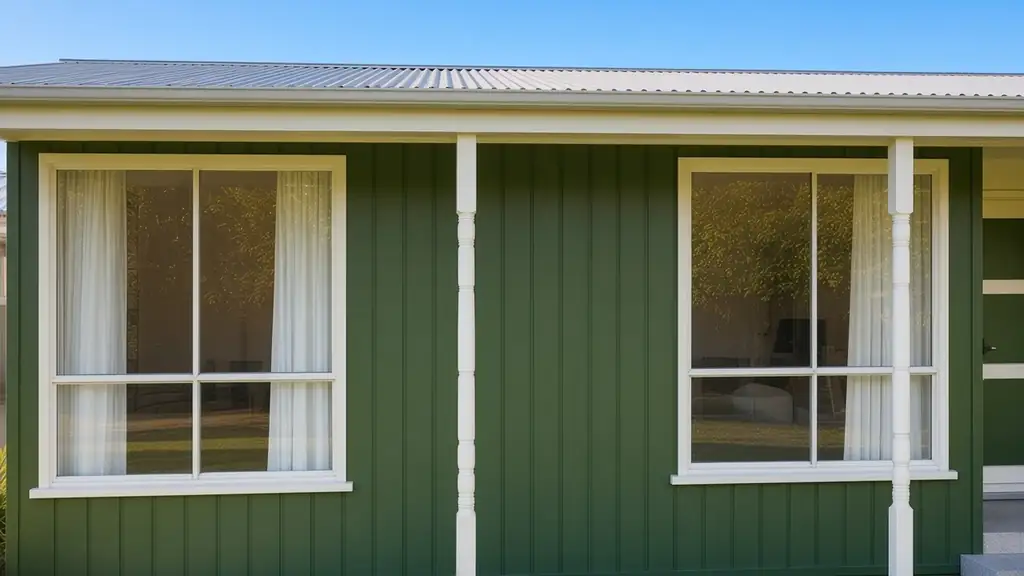
If you walk around most Wellington houses, you'll see it straight away. The north side still looks reasonably tidy. The south side is a different story: a dull green film on the weatherboards, black marks under the eaves, and paint that looks older than it really is.
That's not the paint failing. It's mould and algae, and in this city it has a favourite wall.
Why the south side cops it
Wellington doesn't get a lot of winter sun at the best of times. A south-facing wall gets almost none. It stays damp long after the rain has stopped, and the wind doesn't dry it the way a sunny wall dries. Mould and algae like that. Cool, wet, and left alone.
The wind makes it worse, not better. A southerly drives rain hard against those same walls and keeps them wet. In the hills, in places like Karori and Khandallah and Ngaio, a lot of houses sit in the cloud for large parts of the year. The south and south-east walls never really get a chance to dry out.
Closer to the harbour, salt gets involved. Homes around Miramar and Kilbirnie, Seatoun and the south coast pick up salt in the air, which holds moisture on the cladding. You get a dusty white film as well as the green. Same problem, slightly different look.
None of this is unusual. It's just what a Wellington house does if it isn't washed.
What you're actually looking at
The green on the boards is algae. The black spotting under the soffits and in the corners of the joinery is usually mould. On the lower boards, especially where the garden sits close to the house or the path stays wet, you'll often get a thicker band of growth.
On plaster and texture-coated houses it can look more like staining than a film. On brick it sits in the pores and along the mortar. Weatherboards show it earliest, because the timber and the paint hold the moisture.
A lot of people think the house needs a repaint when all it needs is a wash. Plenty of walls look tired and come up fine once the growth is gone. The paint was still doing its job. It was just dirty.
When a wash is due
You don't need a calendar as much as you need a look. If the south wall has gone green, or the eaves have a black smear, it's due. For most Wellington homes that's about once a year. Houses under trees, hard up against a bank, or sitting in the wind and salt can need it sooner.
Late spring or early summer is a good window, once the worst of the winter damp has passed and there's a stretch of settled weather. That said, we wash all year. We just pick our days around the forecast.
If you're about to paint, wash first and give the walls time to dry. There's no point putting new paint over a wall that still has mould in it.
How we wash it
A house wash in Wellington is a soft wash, not a water blast. High pressure on weatherboards and painted plaster is a bad idea. It can lift paint, drive water in behind the cladding, and it only knocks the top off the growth, so the green comes back quickly.
We put a cleaning solution on at low pressure, give it time to kill the mould, and rinse it off. The walls, eaves, joinery and the outside of the gutters are all included. Plants get rinsed before and after.
The rest of the property is separate if you want it: the roof, the inside of the gutters, a driveway or a deck. Plenty of people do the lot on the same visit. That makes sense, because a dirty roof and overflowing spouting will streak a wall you've just had cleaned.
Around Wellington
We do this work across Wellington city, the Hutt Valley and Porirua. The hillside suburbs tend to show the south-side problem earliest, but it happens everywhere, including houses that look like they get plenty of weather.
If you want the wider list of what we do in town, that's on our Wellington cleaning services page.
Call or text 027 303 8398 if you want a price. Quotes are free. A few photos of each side of the house, especially the south wall, help us get it right.
Quick questions
Why is only one side of my house green?
That side stays wetter for longer. In Wellington it's usually the south or south-east wall. It gets less sun, and the wind pushes rain onto it. The other sides dry out sooner, so the growth is slower.
Will a house wash stop the green coming back?
It slows it down a lot, because the mould is killed rather than just rinsed off. It will come back eventually. That's the climate. A wash about once a year is what keeps most Wellington houses looking after themselves.
Is a soft wash safe on old weatherboards?
Yes, done at low pressure. Old paint and soft timber are exactly why we don't put a water blaster on the walls.